Alexandria, Virginia
Trash Compactor Repair in Alexandria, VA
Alexandria Appliance Repair Co performs Trash Compactor Repair across Alexandria, Virginia on a written-figure standard: the fault is proven by measurement before any price is named.
Alexandria, Virginia
Alexandria Appliance Repair Co performs Trash Compactor Repair across Alexandria, Virginia on a written-figure standard: the fault is proven by measurement before any price is named.
Alexandria Appliance Repair Co treats every trash compactor as evidence: codes read, temperatures and currents measured, and the verdict delivered in plain language with one figure attached.
Trash compactors are the orphans of the appliance world: fewer makers, fewer parts, and owners who love them fiercely. We repair compactors of the surviving platforms, ram drives, chains, switches, and drawers, and we source parts patiently for machines worth keeping. There is a pattern to trash compactor failures in Alexandria: they are noticed on weekends, before guests, and ahead of holidays with suspicious reliability.
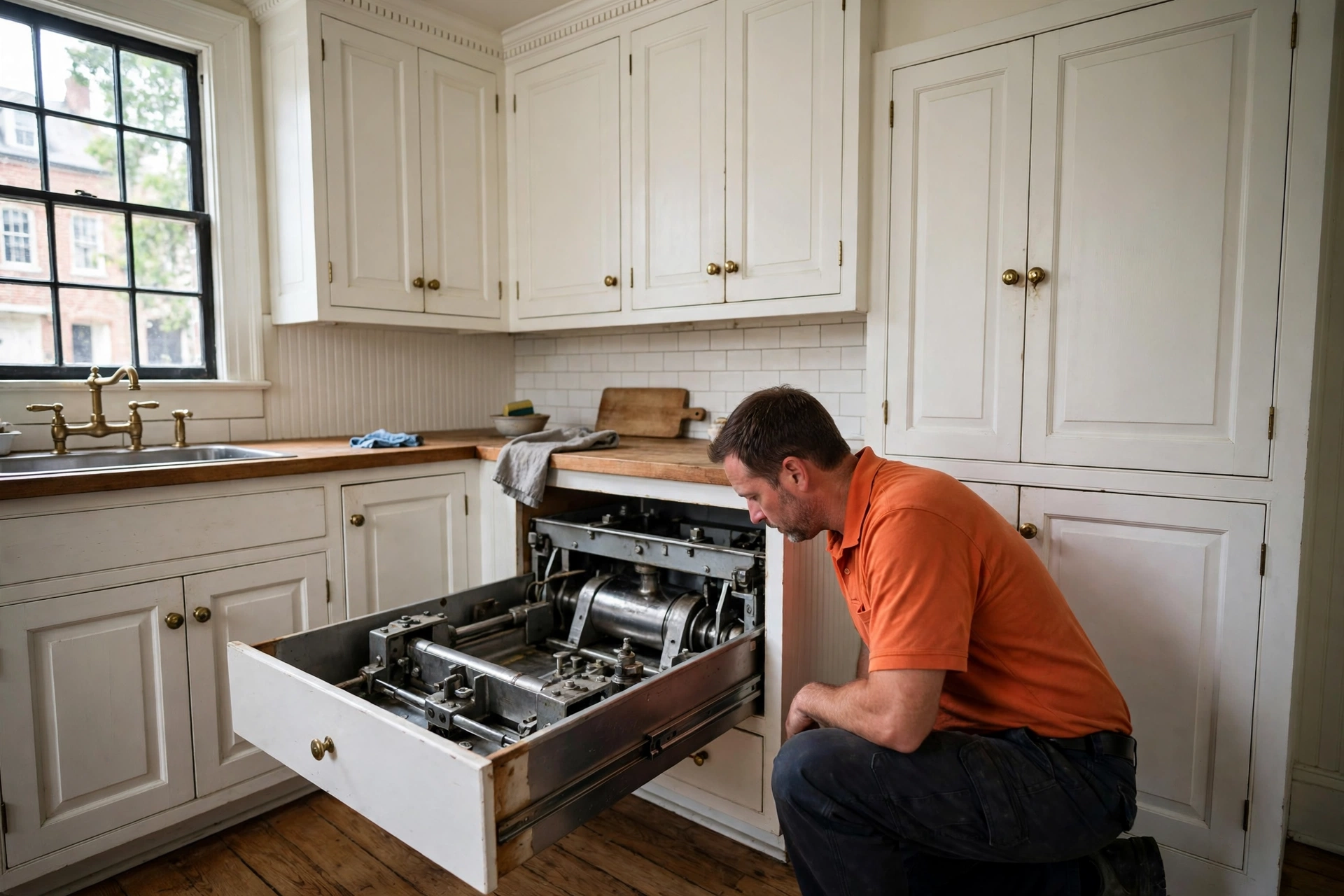
A drawer that binds or sags changes how the ram meets its load, and correcting the drawer is part of restoring the crush. Compactors that run but do not crush have lost mechanical advantage somewhere in the drive, often a stretched chain slipping under load. A ram that will not descend is a drive story: chain, sprockets, or the reversing switch that tells the motor which way is down. Second units in Alexandria basements and garages get the same testing as the kitchen upstairs.
Key switches and drawer safety switches guard a machine that can hurt someone; any switch fault takes the unit out of service until it is right. Parts for discontinued platforms are a scavenger hunt we are willing to run, with the odds stated before you spend anything on the search. Landmark area high rises route their laundry and kitchen work through the same diagnostic standard as the single family streets.
Compactor diagnosis runs the ram through observed cycles with the drawer loaded lightly, then inspects chain tension, switch timing, and drawer geometry in that order. Del Ray and Rosemont owners tend to keep machines for decades, and our records are kept with that horizon in mind.
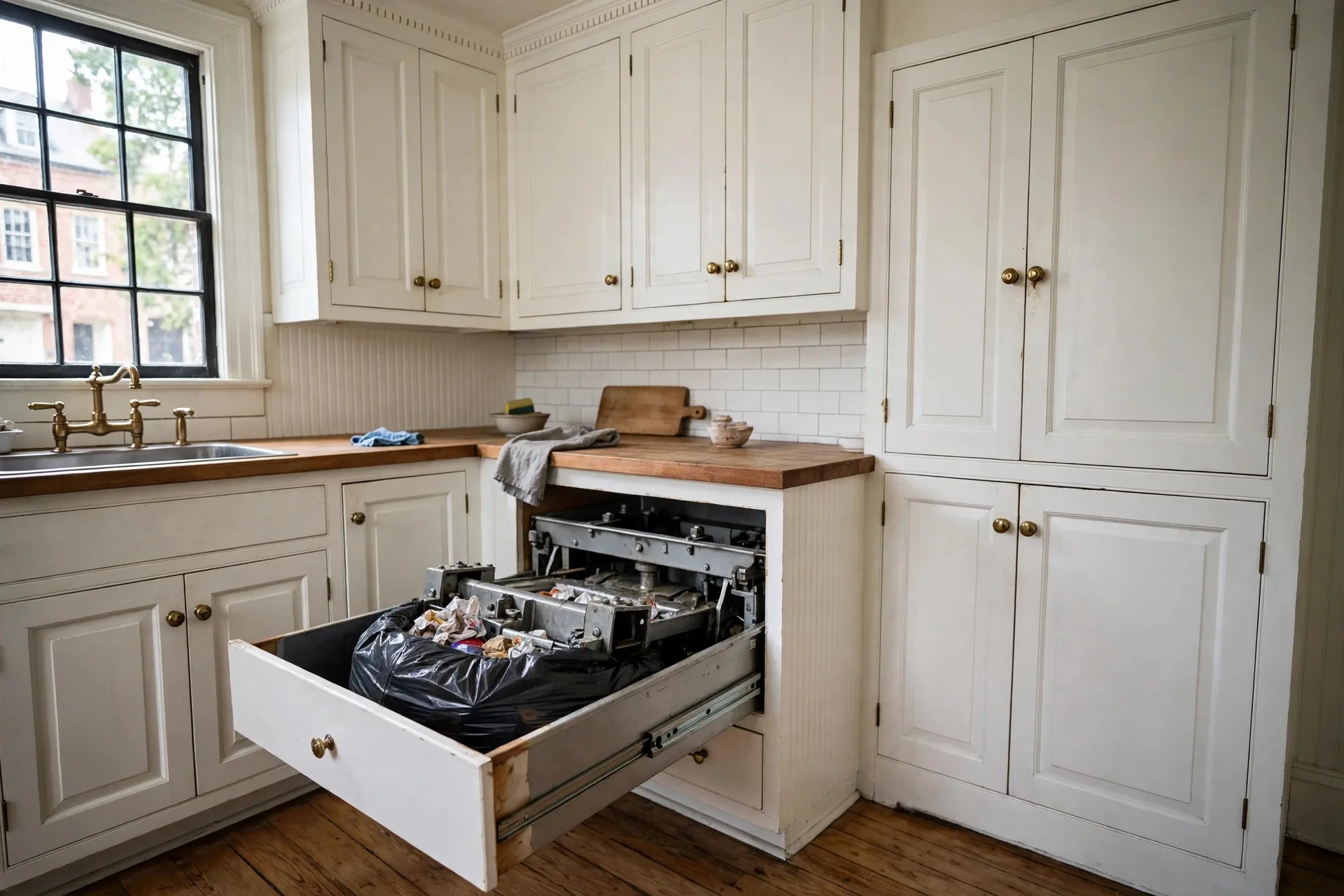
A call from Old Town: Compactor drawer binding and sagging. Testing found flattened drawer rollers and a bent guide. We replaced the rollers, straightened the guide, and verified full travel through several cycles. Written figures are the custom here, because Alexandria households plan repairs like they plan everything else, on paper.
What moves the figure is the platform's age: current models price like any appliance, while orphan parts carry search time that is quoted openly. There are no parts ordered on a hunch: the figure follows the diagnosis, in writing, and it holds for the work described. Seminary Hill to the West End, the pattern holds: test first, then talk numbers.
Compactor owners are loyal because nothing else does the job, and we respect that by exhausting the repair path honestly before uttering the word replace, while never pretending a vanished part still exists. If the repair stops making sense at any point in the diagnosis, you hear it at that point, with the numbers. That rule has cost us jobs and earned us the neighborhood, and it is not changing. Alexandria sits in hard water country, and every diagnosis here quietly accounts for scale.
Use the quote form to describe the symptom as you experience it. The plainer the description, the faster the diagnosis starts when we arrive.
The reversing switch or the chain drive is mistiming the stroke. Both are inspectable and repairable on most platforms, and a ram that stops mid travel is protecting the motor from a mechanical argument it would lose. The visit closes with the machine running its real work; Alexandria owners would accept nothing less.
For the major platforms, largely yes for wear parts; for some discontinued lines, the honest answer is shrinking stock. We verify availability before quoting any repair that depends on a scarce part. Storm flickers off the river write themselves into control boards across this city every summer.
Mechanical advantage is being lost: a stretched chain slipping under load is the usual thief, sometimes with worn sprockets keeping it company. The drive is serviced as a system. Potomac Yard's newer builds run different fault patterns than Arlandria's older kitchens, and both are familiar ground.
Published guides put a diagnostic visit at $75 to $125, usually credited toward the repair. On a compactor it includes the drive inspection and a parts availability check for your model. Alexandria sits in hard water country, and every diagnosis here quietly accounts for scale.
Compactors age gracefully because they are simple. The decision usually turns on the drive's condition and the parts horizon, both of which the visit settles. Del Ray and Rosemont owners tend to keep machines for decades, and our records are kept with that horizon in mind.
Drawer work is standard: wheels, guides, and alignment. It is also the cheapest way to make an old compactor feel new. Potomac Yard's newer builds run different fault patterns than Arlandria's older kitchens, and both are familiar ground.
Tell us which appliance is failing and how, or which appliance you need installed. We read every request that comes in and respond with the published range for that kind of work and the next step, starting with a diagnostic visit to confirm the fault.
Prefer to talk it through first? Send the form and we will call you back at the number you give us.