Alexandria, Virginia
Dryer Repair in Alexandria, VA
Alexandria Appliance Repair Co is the Alexandria crew for dryer repair: testing comes before pricing, the figure is put in writing, and the repair follows only after you approve it.
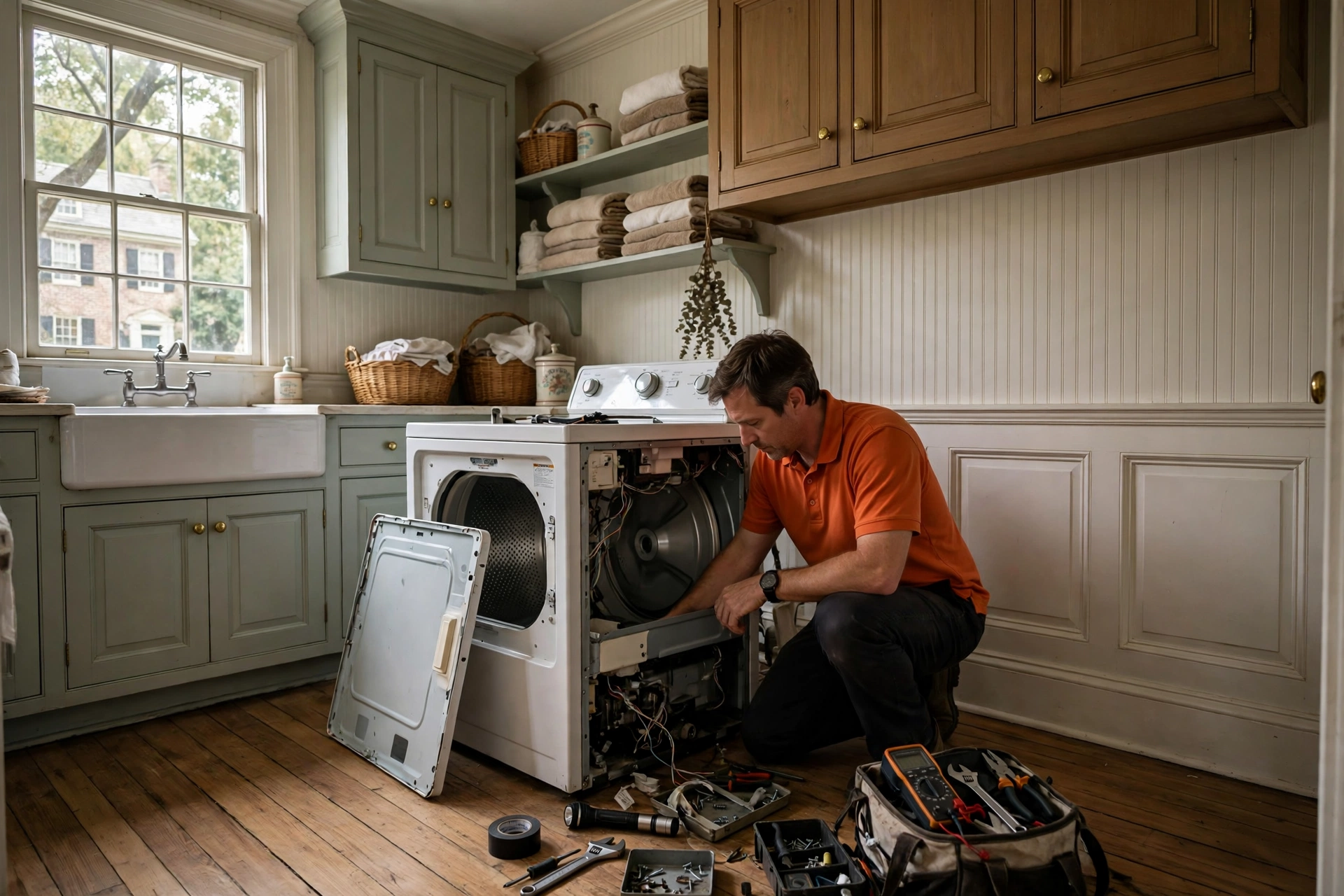
Alexandria, Virginia
Alexandria Appliance Repair Co is the Alexandria crew for dryer repair: testing comes before pricing, the figure is put in writing, and the repair follows only after you approve it.
Alexandria Appliance Repair Co handles dryer repair across Alexandria, VA with a simple discipline: measure first, quote in writing, and let the evidence name the part before anyone orders it.
Dryers are honest machines: when they fail, the fault is usually on a short list and the list is testable. We repair gas and electric dryers, and we check the vent path as part of every heat call, because the vent fails as often as the dryer does. In Alexandria, the dryer calls follow the housing: Old Town's historic rowhouses and Del Ray's bungalows sit alongside West End high rises and garden apartments, so the appliance stock runs from panel ready built ins in renovated kitchens to hardworking freestanding pairs in older homes.
Half of appliance diagnosis is geography. Old Town's historic rowhouses and Del Ray's bungalows sit alongside West End high rises and garden apartments, so the appliance stock runs from panel ready built ins in renovated kitchens to hardworking freestanding pairs in older homes. The water here scales heating elements and inlet valves on a schedule, summer humidity works on every door seal in the city, and the grid's storm flickers are written into control boards across whole neighborhoods at once.
Tumbling with cold air is the classic electric dryer pattern: an open heating element or a tripped thermal fuse, both confirmed with a continuity meter. When the dryer heats but loads take two cycles, suspect the vent before the machine. A clogged vent is the root cause behind a large share of blown fuses and dead elements. A thermal fuse is a messenger, not the disease: it opens because airflow failed, and replacing it without clearing the cause buys a repeat call. On gas dryers, weak igniters and tired valve coils produce the heat that fades: strong at the start, gone by mid load. Second units in Alexandria basements and garages get the same testing as the kitchen upstairs.
The warm up squeal belongs to the idler pulley or a dry roller shaft; catching it early keeps a cheap part from chewing up the drum support. A humming dryer that will not tumble has usually parted its belt, the plainest mechanical failure the machine offers. Rhythmic thumps and squeals are the drum support system wearing out: rollers, glides, and the idler pulley, all replaceable without replacing the dryer. Alexandria sits in hard water country, and every diagnosis here quietly accounts for scale.
Mid cycle shutdowns are thermal events. The motor or the exhaust path is running hot, and the cause is found with a thermometer and a vent check. Lint is the safety topic in every dryer visit: we clear the cabinet and blower housing as part of heat repairs, because lint plus a failing element is the combination that matters. Sensor dry complaints often end with a wiped sensor bar: softener residue insulates the strips and the control thinks dry means damp. Landmark area high rises route their laundry and kitchen work through the same diagnostic standard as the single family streets.
We test the heat circuit part by part and measure what comes out of the vent, because a dryer is a system of machine plus ductwork and the fault lives in either half. Written figures are the custom here, because Alexandria households plan repairs like they plan everything else, on paper.
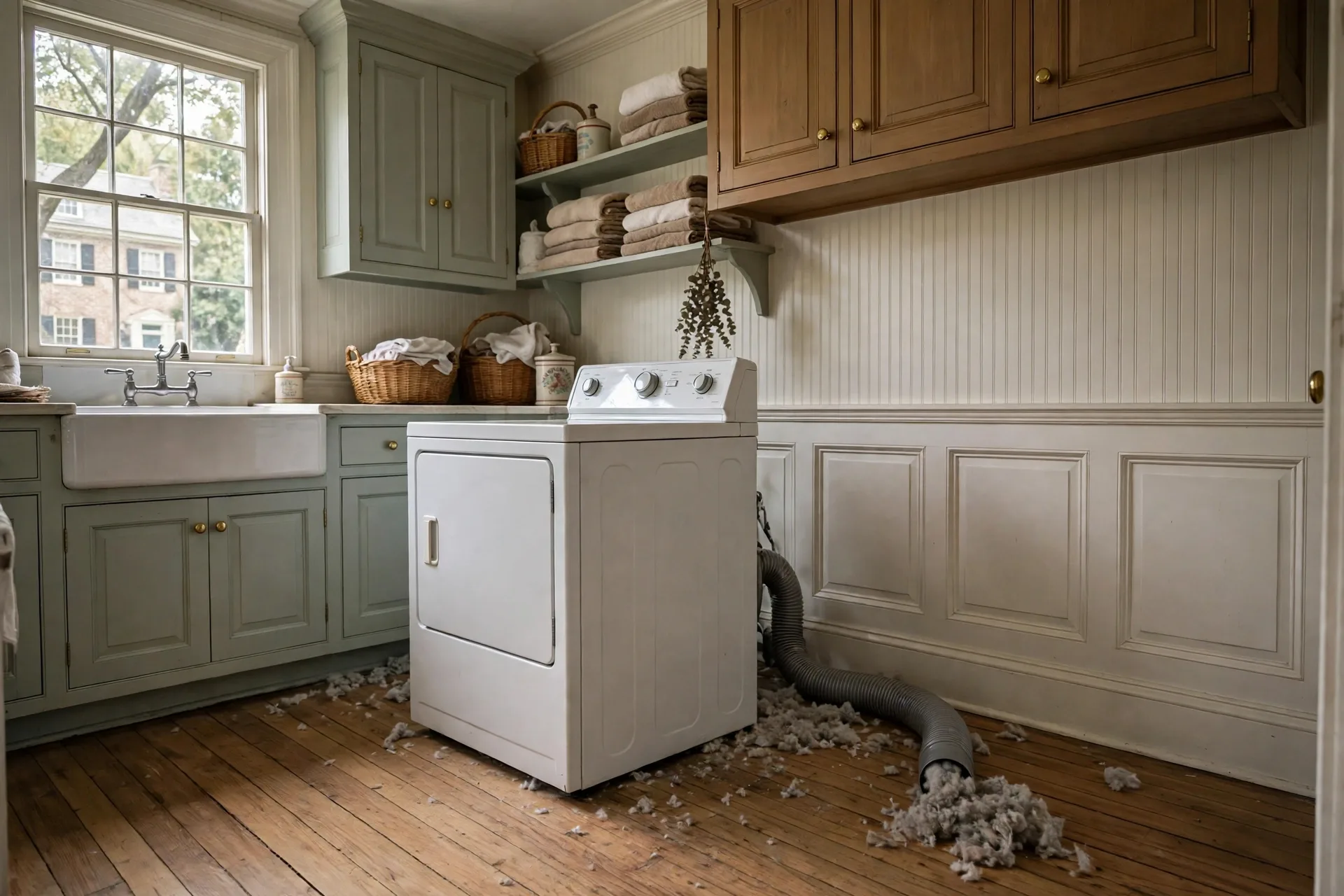
A call from Rosemont: Electric dryer tumbling cold after a move. Testing found the heating element had opened and the vent transition hose was crushed flat. We replaced the element, fitted a proper vent transition, and dried a test load on the timer. Seminary Hill to the West End, the pattern holds: test first, then talk numbers.
What moves the figure is whether the fault is a wear part or a drive part, and whether the vent needs work alongside the machine to keep the repair from repeating. There are no parts ordered on a hunch: the figure follows the diagnosis, in writing, and it holds for the work described. Del Ray and Rosemont owners tend to keep machines for decades, and our records are kept with that horizon in mind.
Dryers punish parts swapping: three different parts produce the same no heat symptom, and two of them fail because of the third one's working conditions. We test the chain, fix the cause, and the repair stays fixed. Every job on this page ends with the appliance run through its work in front of us. A repair that has not performed is a theory, and we do not leave theories running in your kitchen. Second units in Alexandria basements and garages get the same testing as the kitchen upstairs.
Tell us what the dryer is doing, or not doing, on the form and we will take it from there: diagnosis first, one written figure, and the repair done properly.
On electric models, an open heating element or thermal fuse; on gas models, the igniter or valve coils. All are meter tests, and the repair is quoted from the test result, not from the symptom. The visit closes with the machine running its real work; Alexandria owners would accept nothing less.
Statistically it is the vent, and it is the first thing we check, because replacing dryer parts for a duct problem helps no one. The airflow test settles it in minutes. Storm flickers off the river write themselves into control boards across this city every summer.
An element is one of the best value repairs in laundry. The honest exception is the dryer that also needs a motor and rollers; at that point we price the whole picture for you. Old Town's historic housing rules shape how we plan Alexandria visits, and the planning starts on the form.
The visit runs $75 to $125 in the published guides, credited toward the repair in the usual arrangement, and it covers the vent side of the diagnosis too. Potomac Yard's newer builds run different fault patterns than Arlandria's older kitchens, and both are familiar ground.
Yes, belts are a standard, inexpensive repair. While the cabinet is open we inspect the rollers and idler that the belt depends on, so you know the state of the whole drive system. Potomac Yard's newer builds run different fault patterns than Arlandria's older kitchens, and both are familiar ground.
Usually heat: a motor overheating or an exhaust path restricted enough to trip protection. It is a diagnosis worth doing properly, because the same restriction is what kills elements and fuses. Del Ray and Rosemont owners tend to keep machines for decades, and our records are kept with that horizon in mind.
Tell us which appliance is failing and how, or which appliance you need installed. We read every request that comes in and respond with the published range for that kind of work and the next step, starting with a diagnostic visit to confirm the fault.
Prefer to talk it through first? Send the form and we will call you back at the number you give us.